Read an analog sensor with a Raspberry Pi
Reading an analog voltage from a sensor on a Raspberry Pi 5 using an external I2C analog-to-digital converter (ADS1115) on the 40-pin header's I2C pins, with Python on Raspberry Pi OS. The documents read list no analog input on the Pi 5 header.
Technologies that could fit
Suggestions only, not a recommendation. Check each record for limits.
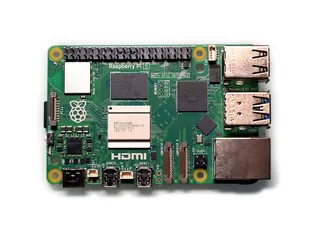
Raspberry Pi 5
Single-board computer with Broadcom BCM2712 quad-core Cortex-A76 at 2.4 GHz, up to 16 GB RAM, PCIe 2.0 x1 and 40-pin header.
Evidence: Inferred

TI ADS1115
Texas Instruments ADS1115: 16-bit, I2C-compatible delta-sigma ADC with 4 single-ended or 2 differential inputs, programmable gain amplifier, internal reference and up to 860 SPS.
Evidence: Inferred
Raspberry Pi OS
Raspberry Pi Ltd's official, free, Debian-based operating system for Raspberry Pi computers, offered in 64-bit and 32-bit builds and in desktop, Full and Lite editions.
Evidence: Inferred
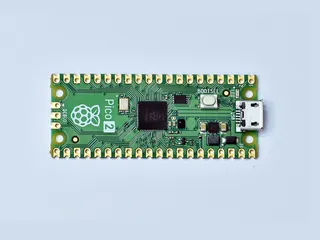
Raspberry Pi Pico 2
Raspberry Pi Pico 2: RP2350A microcontroller board (dual Cortex-M33 or Hazard3 cores up to 150 MHz, 520 kB SRAM, 4 MB flash, 26 exposed 3.3 V GPIO).
Evidence: Inferred
MicroPython
Lean implementation of Python 3 for microcontrollers, with an interactive REPL, a 'machine' module for hardware access, and documented ports including ESP32 and Raspberry Pi RP2xxx (Pico).
Evidence: Inferred
Caveats
Scope: low-voltage logic-level signals only; no mains, high-voltage or safety-critical guidance. The statement that the Pi 5 header has no analog input is an inference from absence in the RP1 function table and header documentation (class 2), not a vendor statement. Wiring, library and code are untested here. Sensor output voltage must be checked against the converter input range in the TI datasheet. skill_level and budget_band are not set because no primary source states them.